Sjælland Accessible walkingCoastal & cliff walkingPrehistoric & archaeology
Stevns Klint
The asteroid layer, five centimetres thick
Photograph by kallerna on Wikimedia Commons
About Stevns Klint
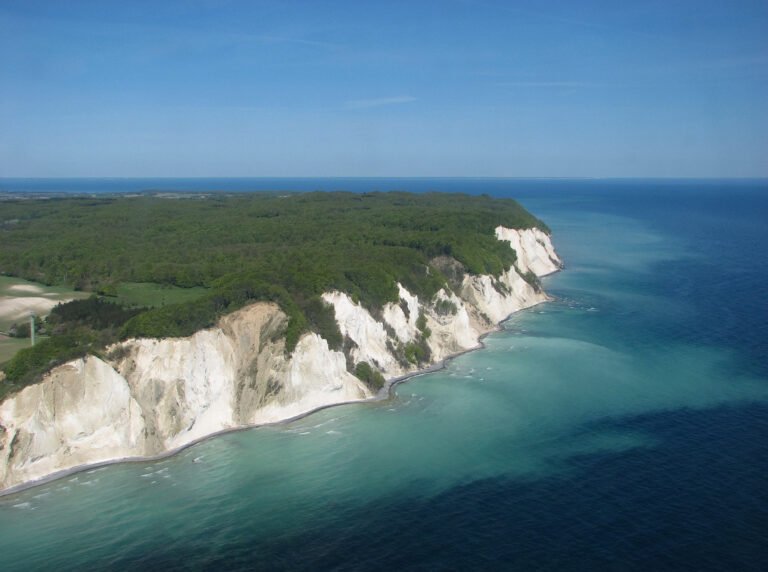
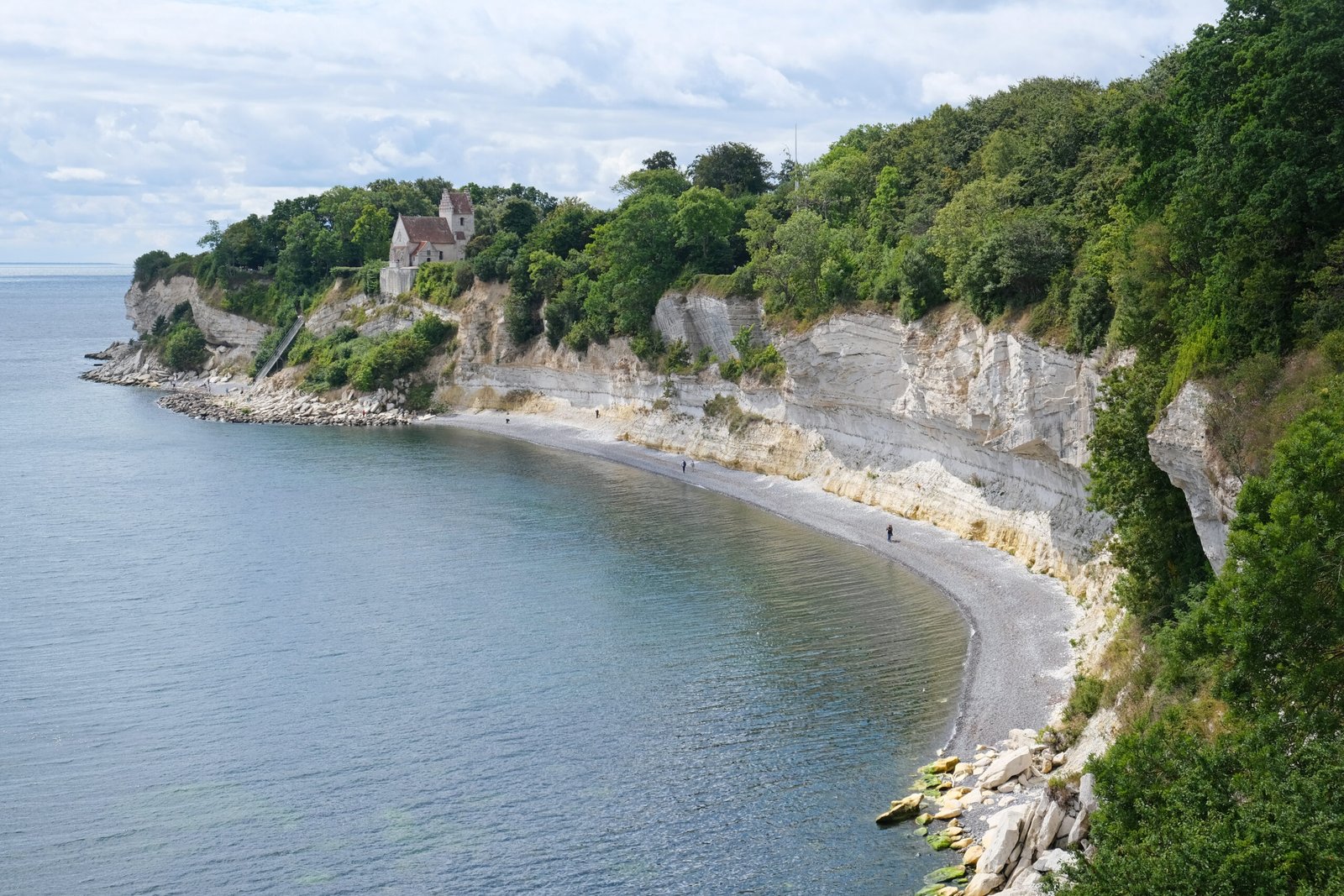
Seventeen kilometres of white chalk cliff rising up to forty metres, and one of the best exposed Cretaceous–Paleogene boundaries anywhere in the world, which is why UNESCO listed it in 2014. The dark layer of fiskeler, five to ten centimetres thick, marks the boundary itself, and its enrichment in iridium is a central piece of evidence for the Alvarez hypothesis that an asteroid impact caused the worldwide mass extinction. Above it sits a band of darker clay recording a sea floor almost emptied of life. The Cretaceous chalk here holds more than 450 species of macrofossils.
Watch
Read and plan
Nearby, across borders
Within 60 km as the crow flies, in any country.